Horizon
Wake up with light.
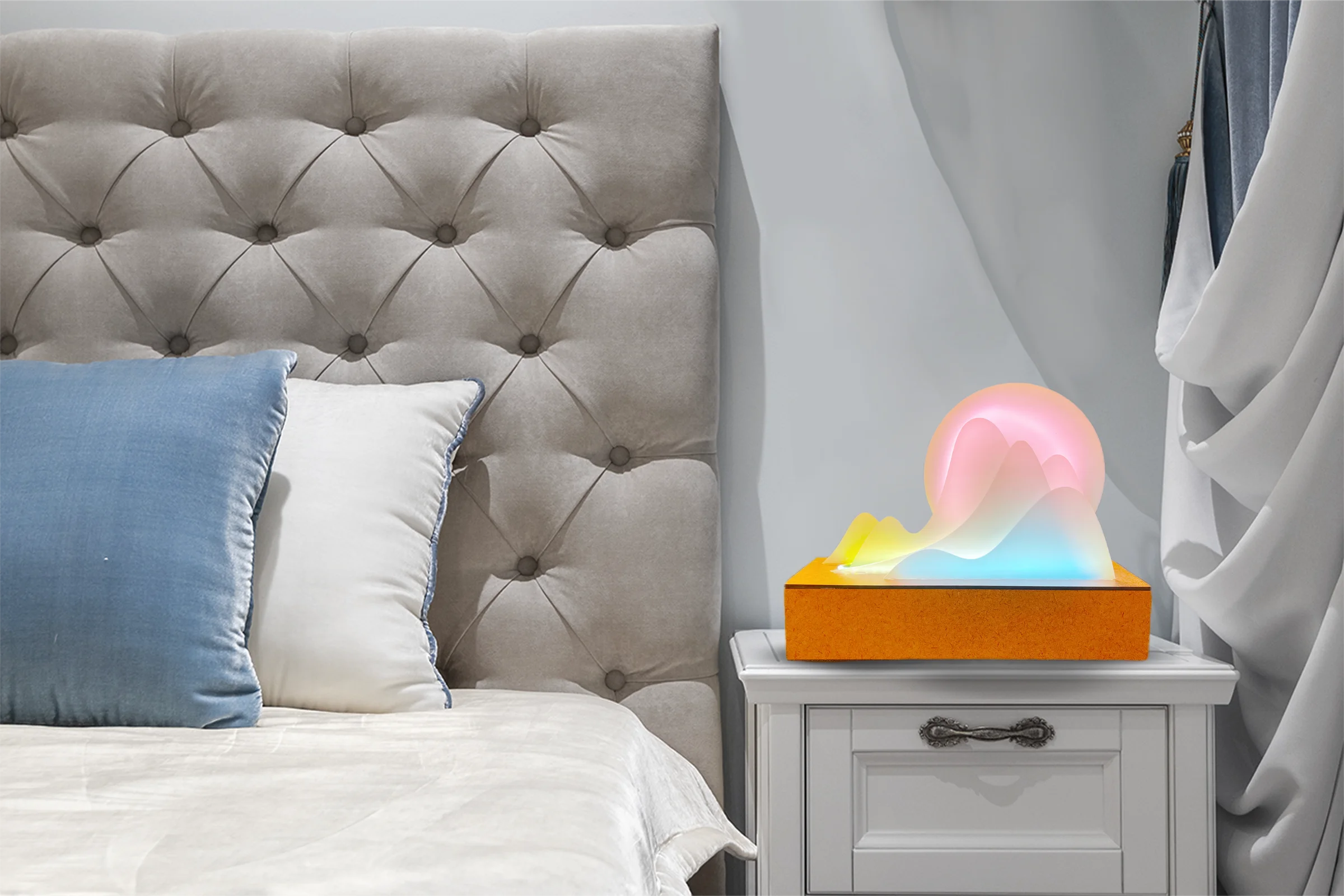
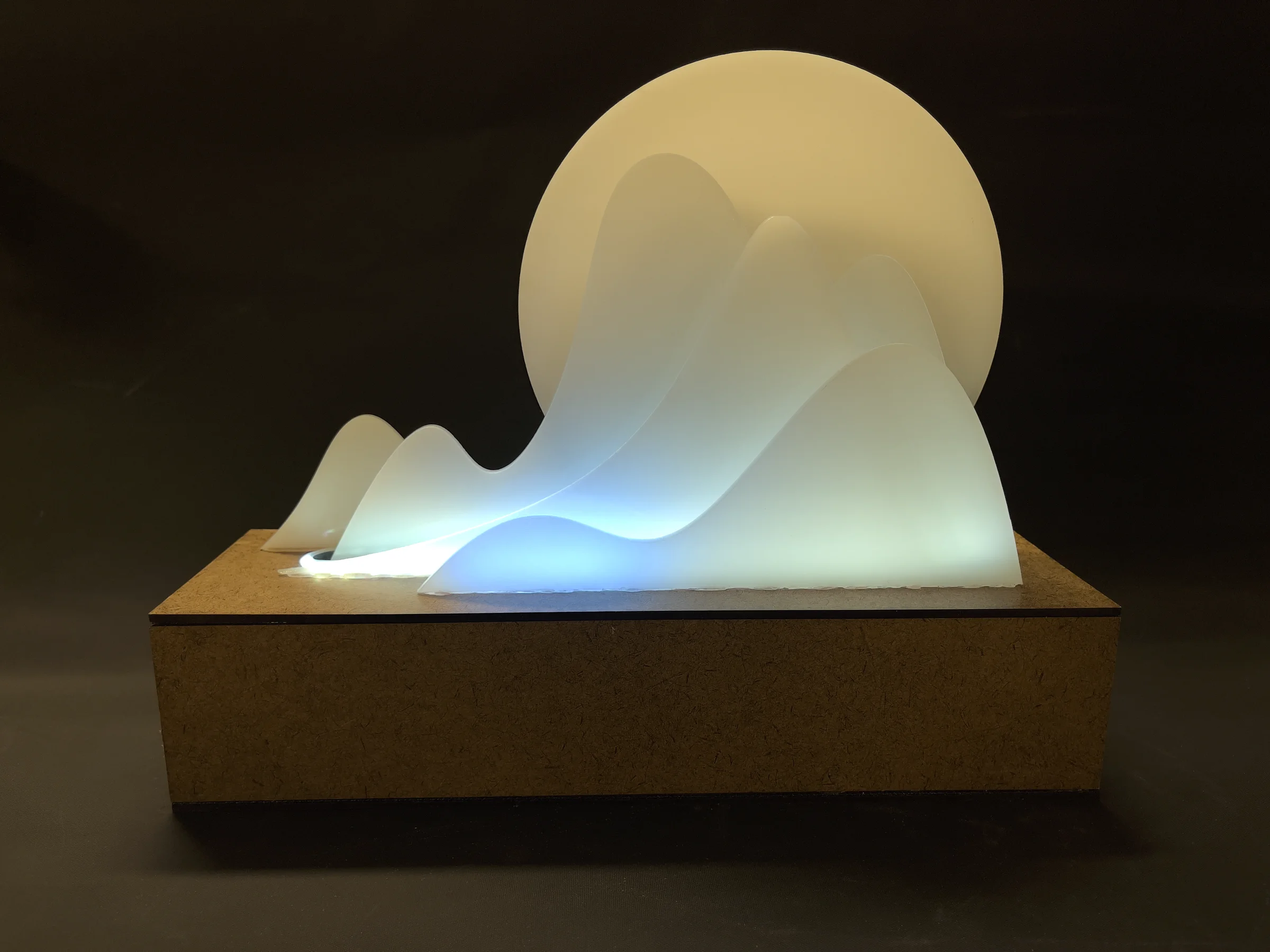
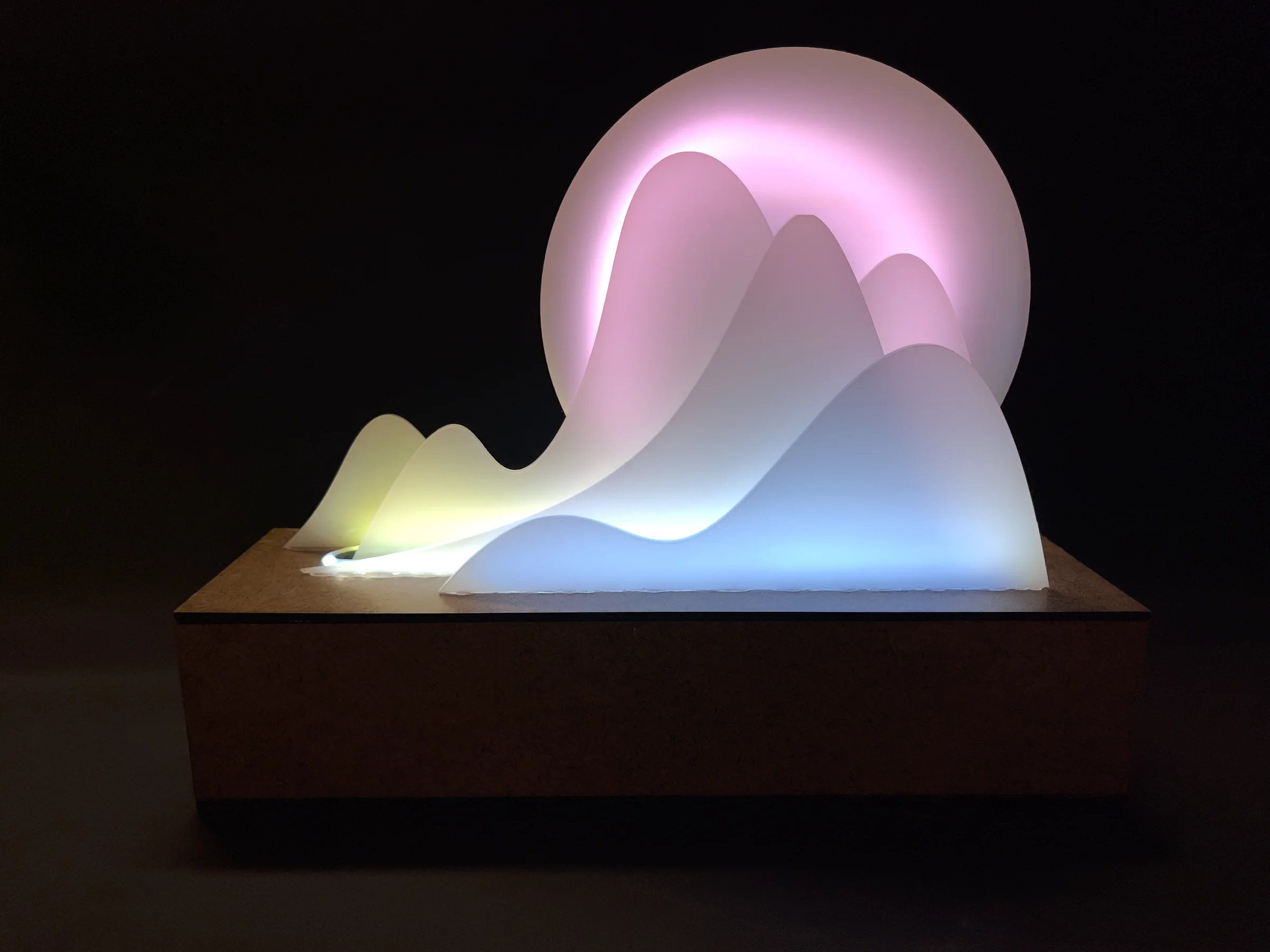
Horizon is a smart bedside timer built with Arduino, NeoPixel LEDs, and a rotary encoder. Users rotate the sun to set a sleep duration; as the night passes, the mountain landscape lights up layer by layer. When the timer ends, the sun gradually brightens into warm tones — a sunrise simulation instead of an alarm sound.
Overview
A sleep timer that turns time into a quiet light experience
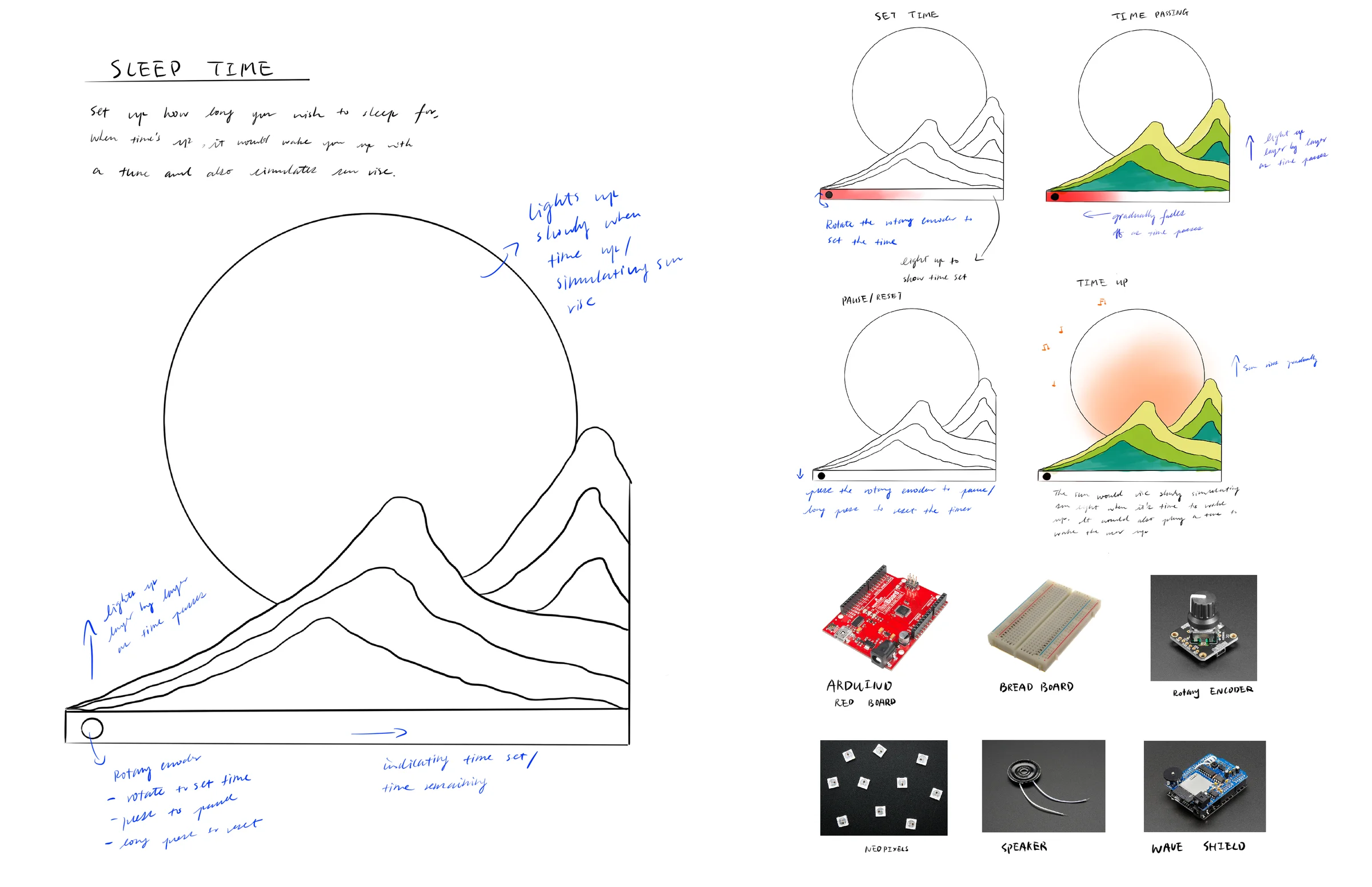
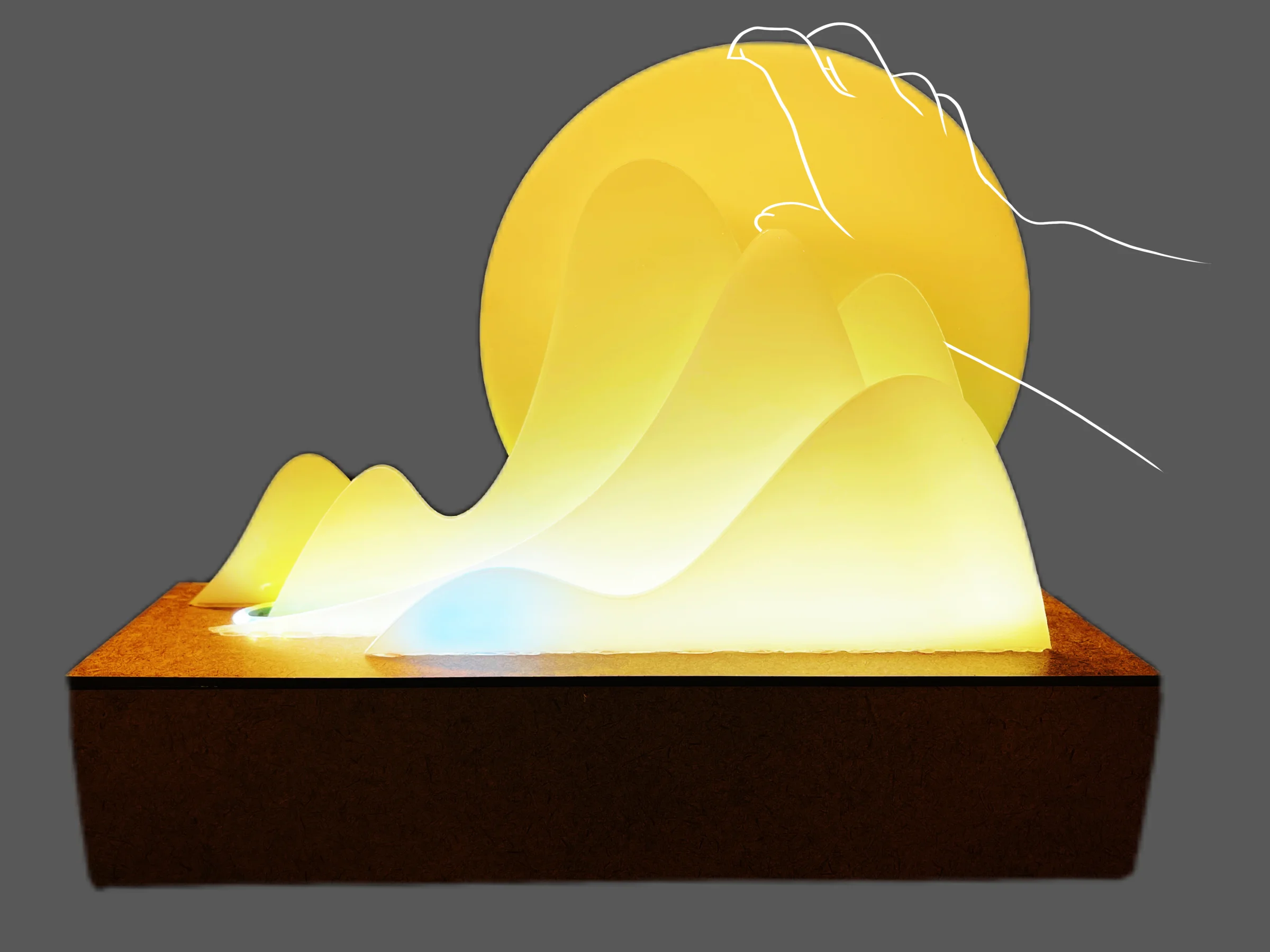
Horizon replaces the alarm clock’s abrupt jolt with something quieter. Rotate the sun to set a timer from 30 minutes to 10 hours. As time passes, the landscape lights up layer by layer — a soft visual cue readable at a glance without checking a phone. When the timer ends, the sun fills with warm light and gradually brightens, waking the user through a sunrise simulation rather than a sound.
Concept
A celebration countdown came first — and revealed what the form needed to do
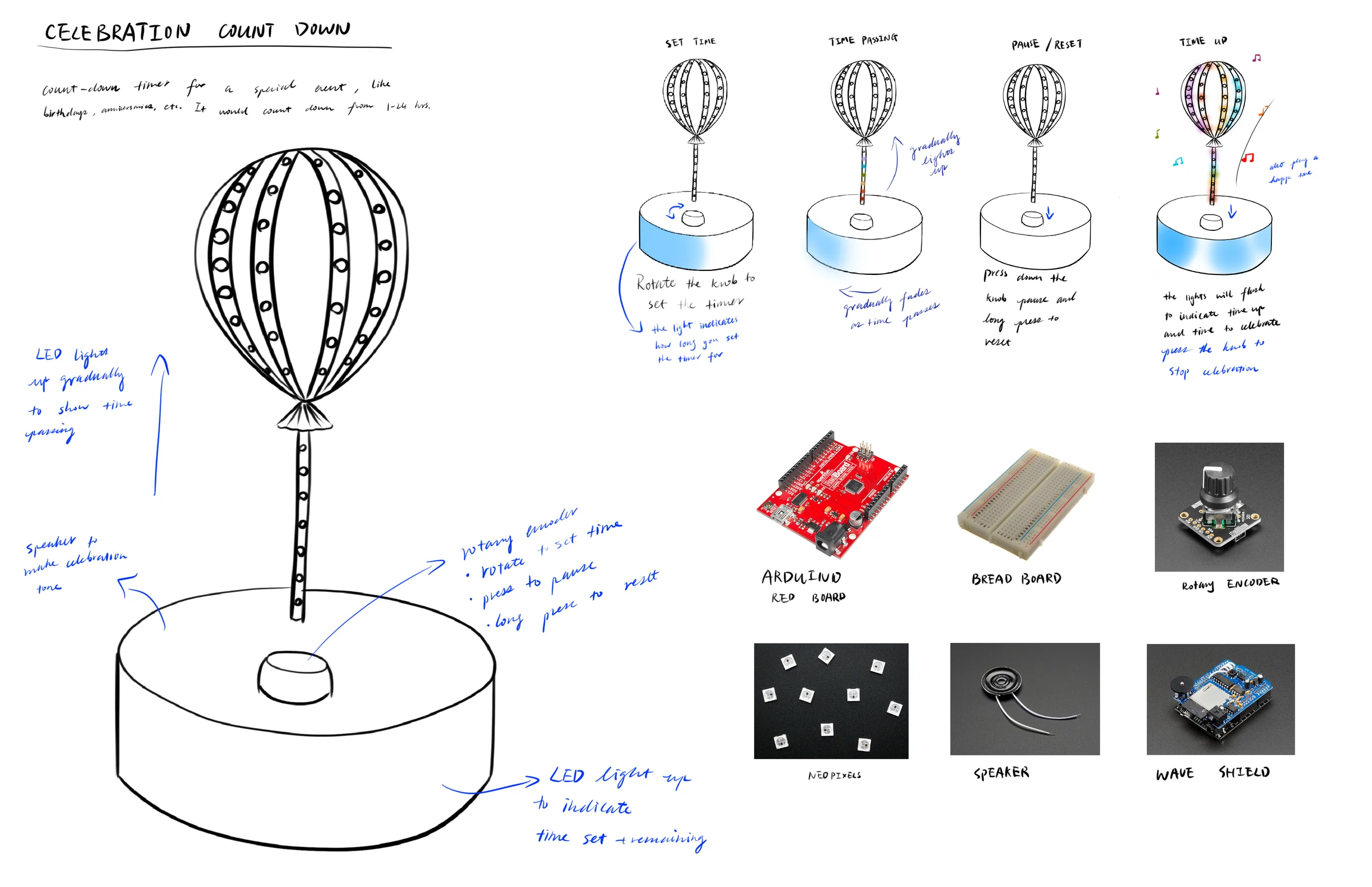
The first direction was a hot air balloon countdown timer for birthdays and anniversaries — same electronics, same interaction logic, but the balloon had no relationship to the feeling of counting down. The form was interchangeable. That was the problem: the form and concept needed to be the same thing. A horizon connects nighttime with morning — the landscape holds the night, the sun holds the time, the sunrise is the wake-up. The metaphor did the work the balloon couldn’t.
The mountain layers made time visible without numbers
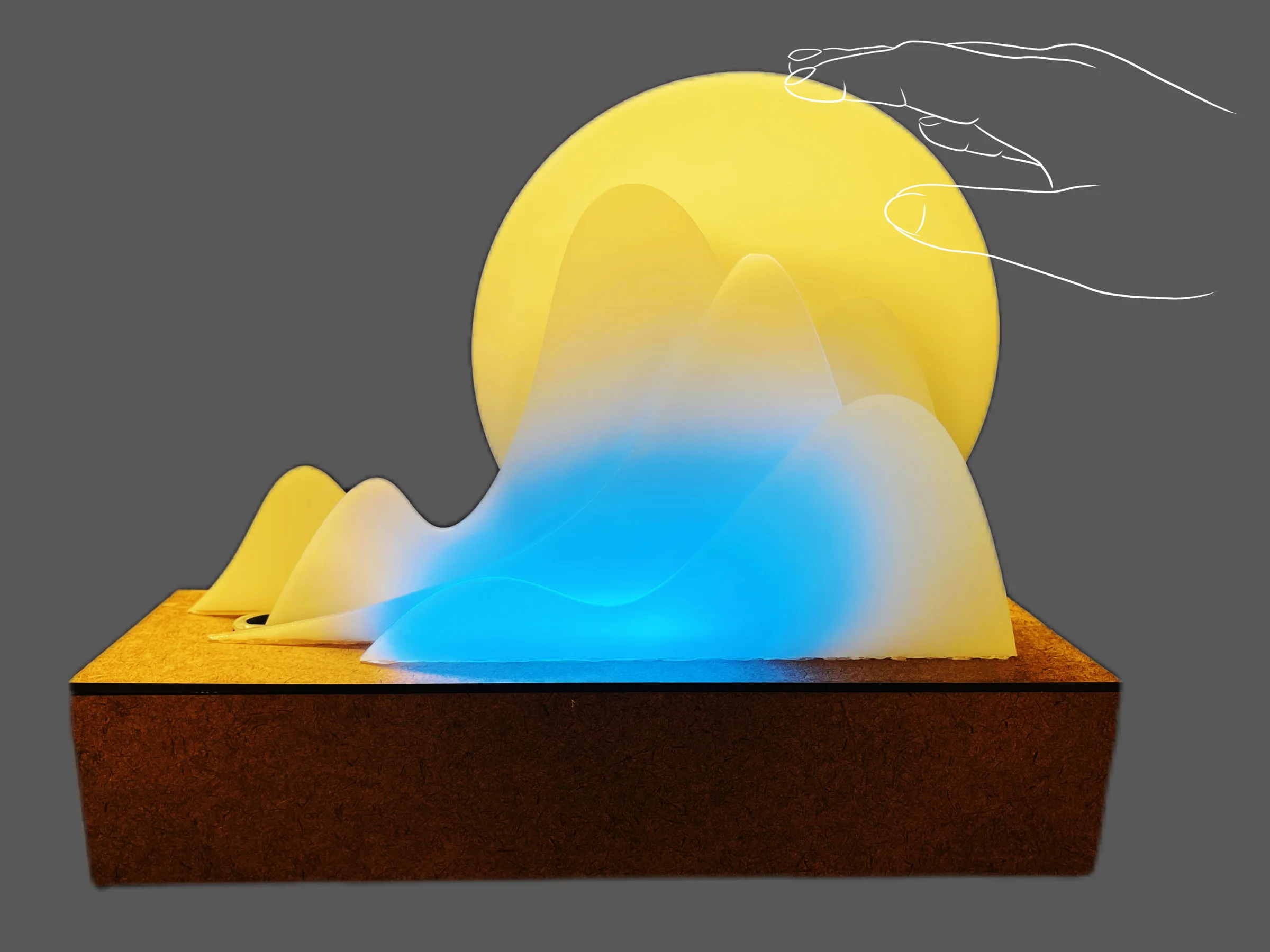
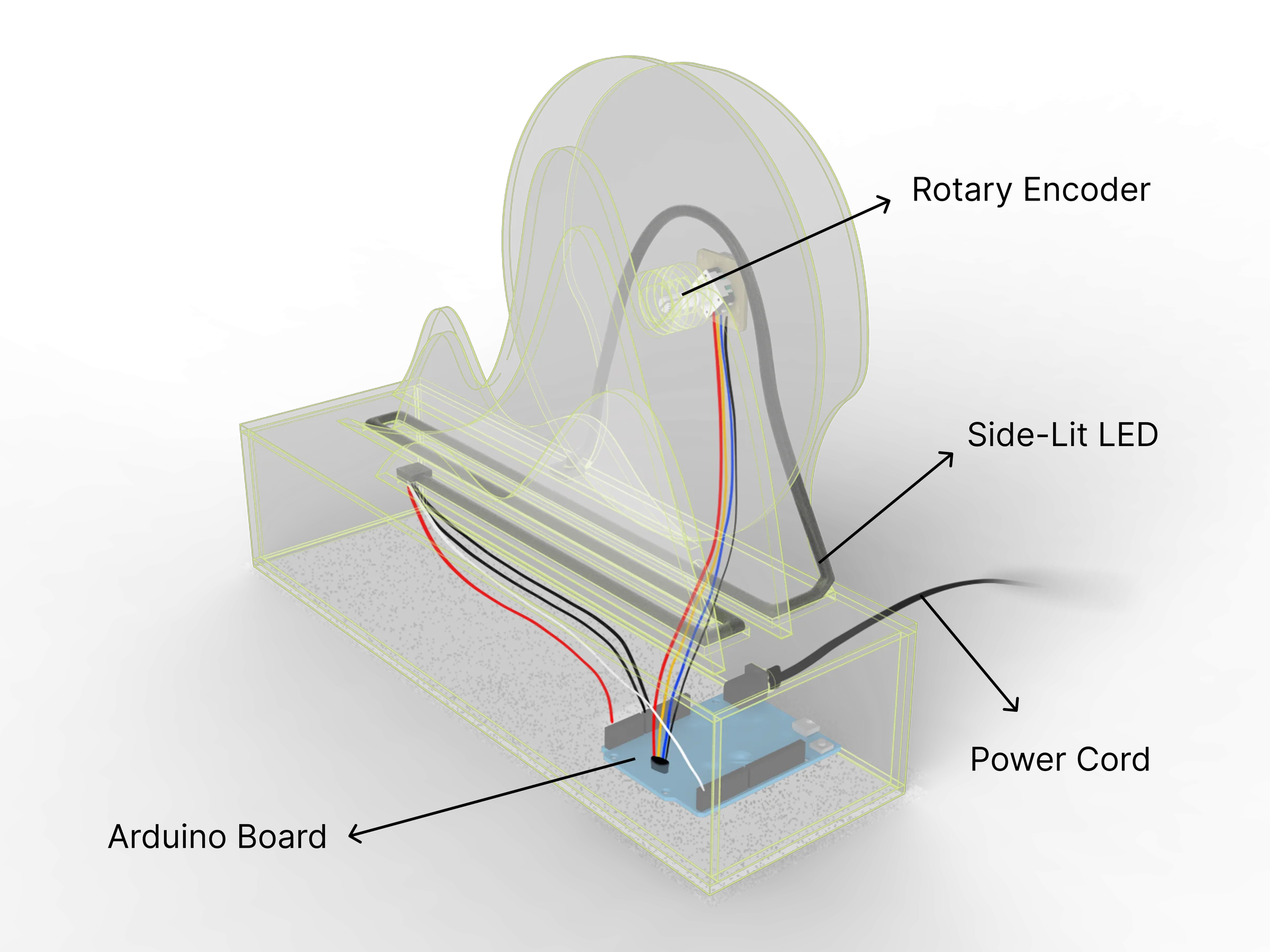
Each NeoPixel represents 30 minutes. The layers light up base to peak as time passes, so a user waking briefly can read how much of the night is left at a glance. The sun serves as both the visual centerpiece and the physical control: rotate to set, press to start or pause.
Prototype
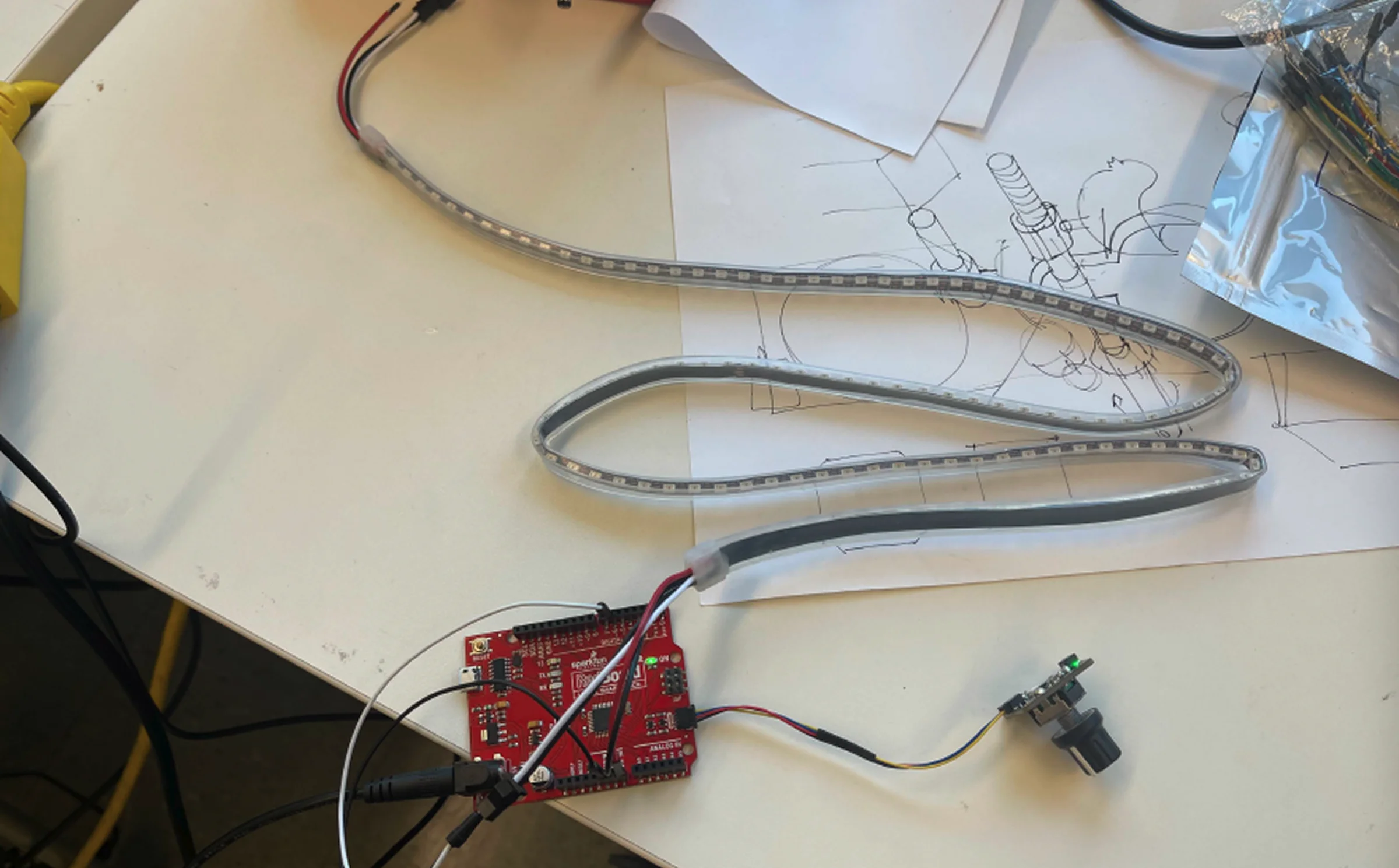
Electronics testing came before the form
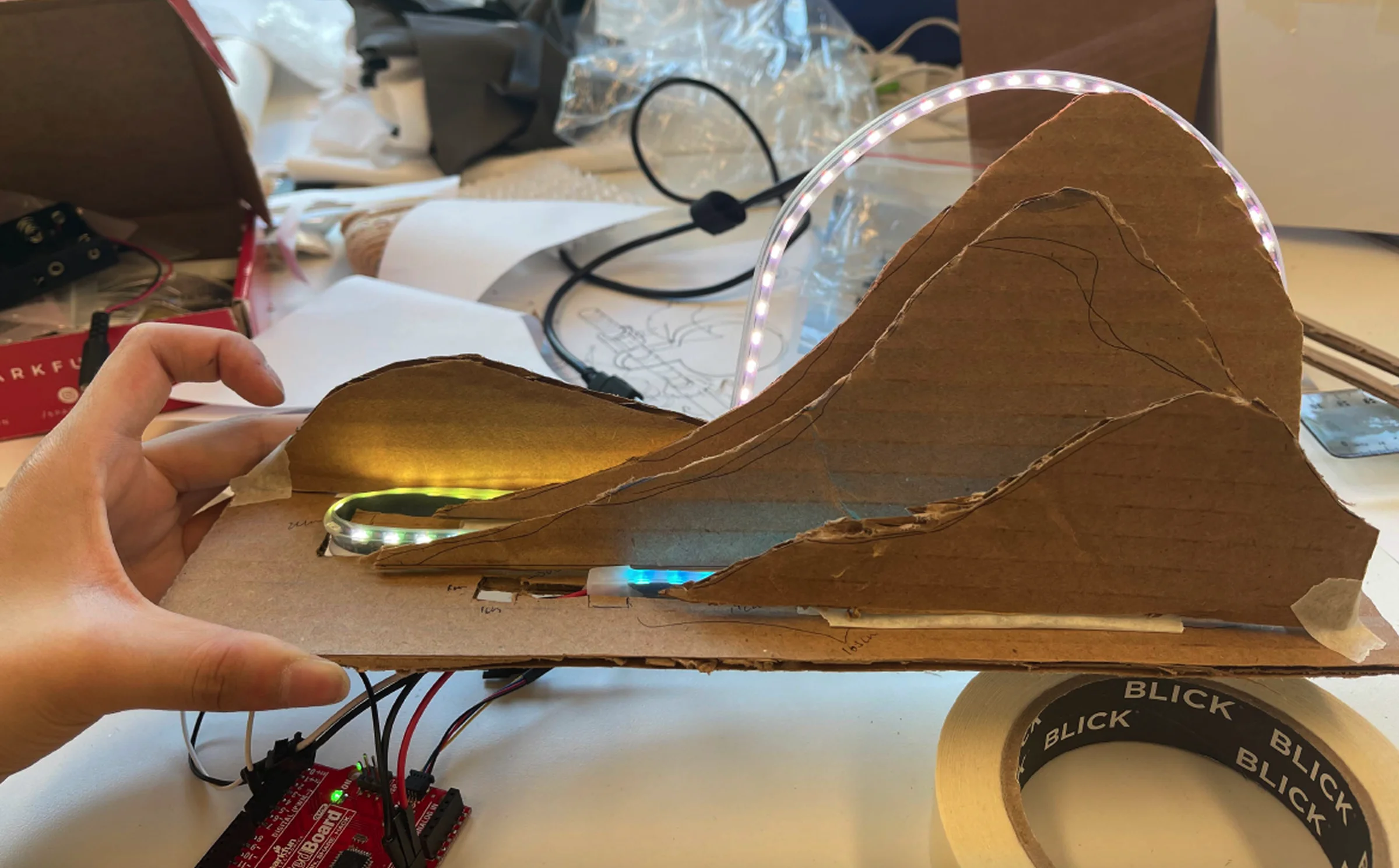
The first stage was wiring LED strips to the Arduino and rotary encoder on flat cardboard — running through the layer-by-layer sequencing and sunrise color shift before committing to any shape. The key question: did the sequencing read as time passing, or just as animation? Each segment lighting up had a clear relationship to the timer, so the behavior was confirmed early.
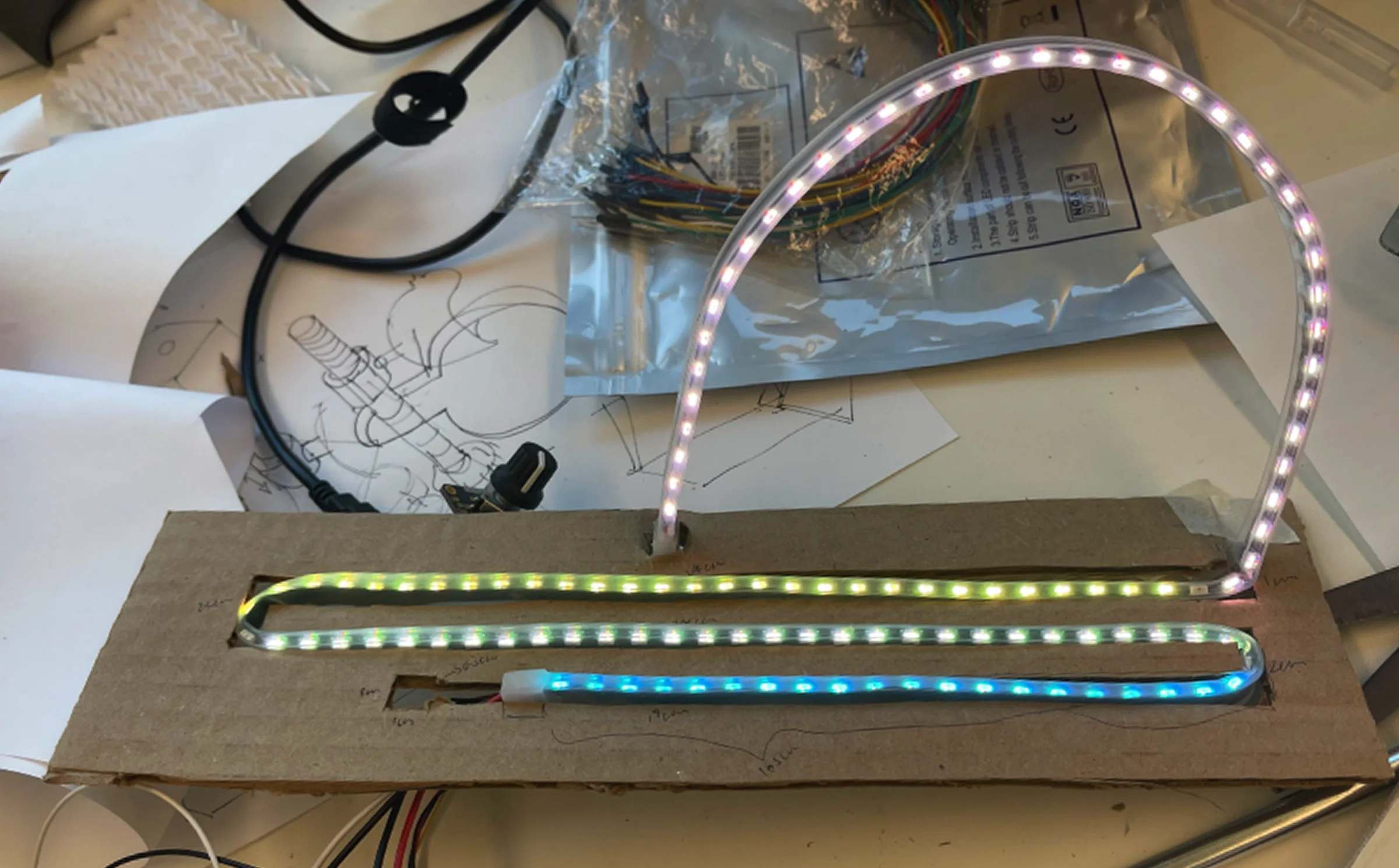
The cardboard landscape proved form and light worked together
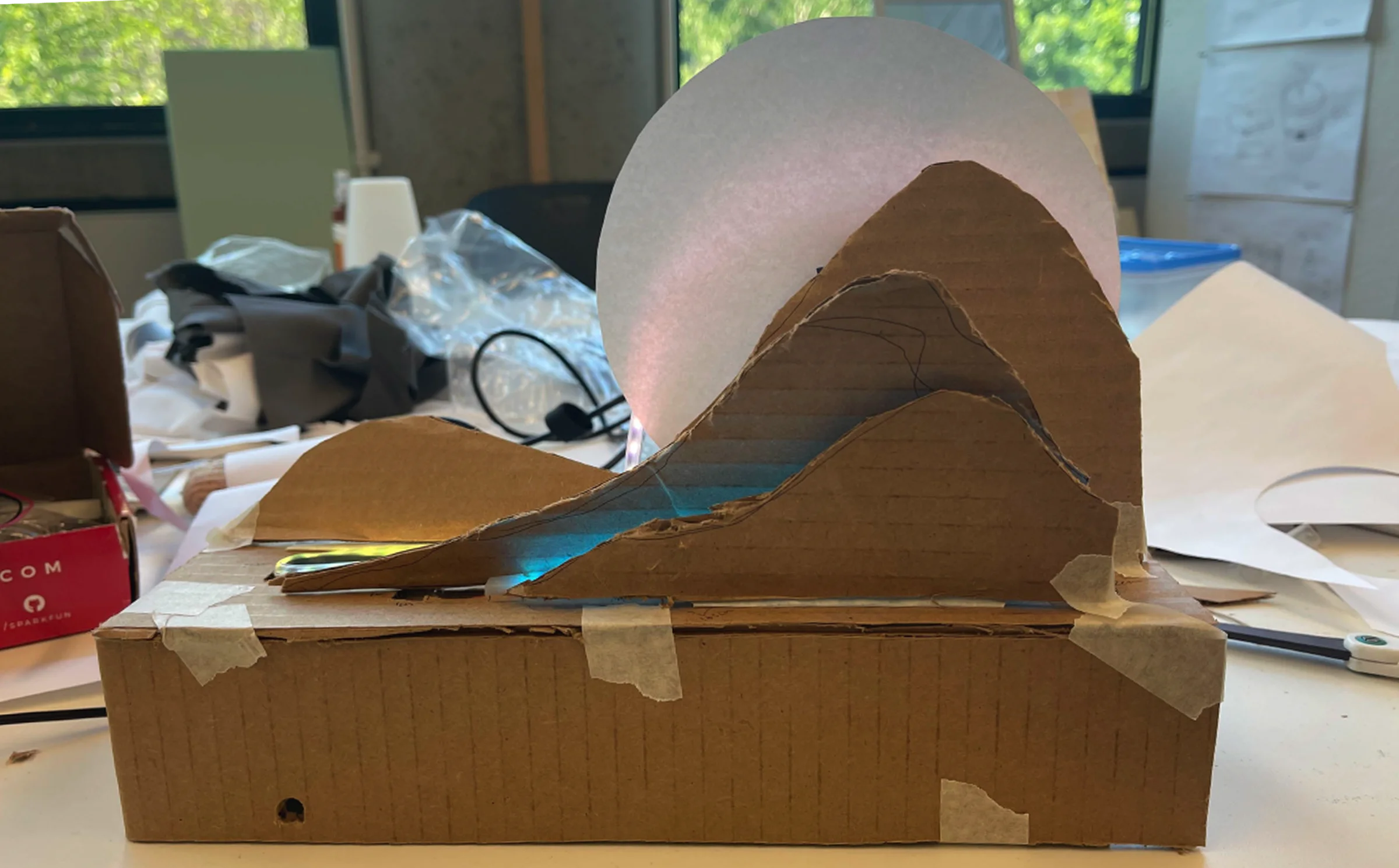
Cutting the mountain layers from cardboard and threading the LEDs through was where the concept had to hold up. The layered profiles created enough depth that each lit segment read as a distinct zone rather than a single band of color. The circular sun cutout produced a soft diffused glow that felt clearly different from the countdown mode. The rotary encoder on the base confirmed the interaction position felt natural.
Final Design
How it works
What it looks like
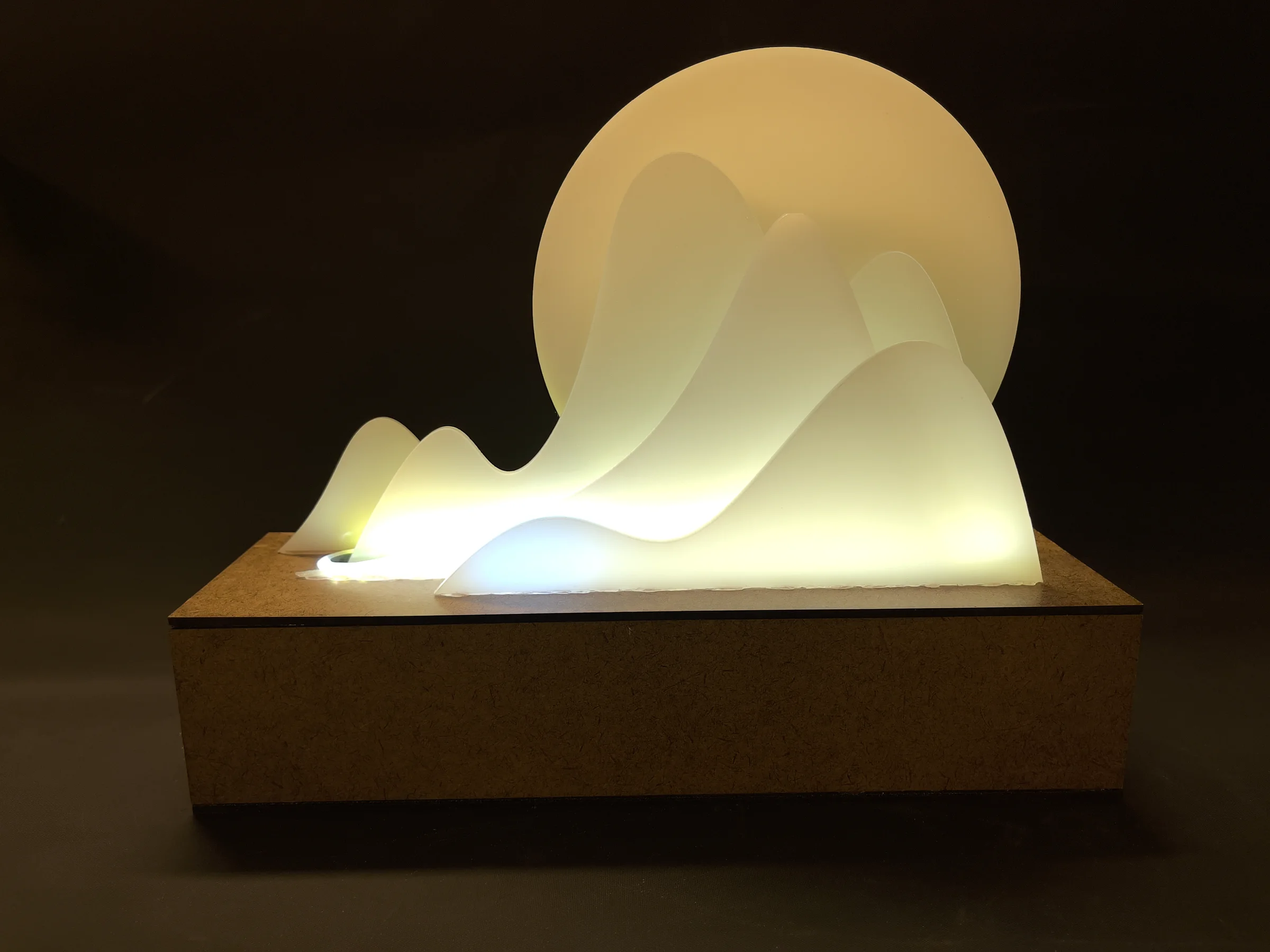
A layered landscape form with side-lit LEDs running through the mountain profiles and a circular sun as the main control. The base houses the Arduino board and power connection; the acrylic sun diffuses the LED ring into the soft glow used for both countdown and sunrise modes.
Let's work together.
Currently seeking full-time product design roles for 2026.